“Not all those …

“Not all those who wander are lost.” J.R.R. Tolkien

Traveling in an environmentally conscious way is a challenge to do for short trips. Weekends away are costly and not all that eco-savvy when you are driving long distances. Lots of luggage can make the car heavier, burn more fuel, and in general, increase the carbon footprint you produce. Aside from some of the obvious suggestions to make your summer travels more “green” such as car pool, pack light, etc., there are also some less known tips that might improve the overall impact your travels have on the environment. 

First, despite the TSA being an added nuisance when needing to take flights for travel, the requirements for carry-on liquids needing to be in containers of 3.4oz or smaller, and smushed together in a one quart clear plastic container does not need to be a tragedy when packing. For example, instead of buying travel sizes of your necessary products every time you travel, you can use BPA Free recycled plastic bottles every time you travel. There is a perk for not wasting additional plastic in purchasing the travel sizes, but also the added benefit that if you buy in bulk, or have DIY products, they can travel easily without interrupting your regular routine. Additionally, this reduces the need to check luggage (which saves you money, and saves on the fuel the plane will need to transport you!) as you will be able to carry-on your needs for vacations. 

Some hotels offer more sustainable methods of housekeeping as well. The Liberty Hotel in Boston, which originally was built in the 1850s as a prison, is a luxury hotel which could serve as a model for other hotels and hotel chains. In the bathrooms, instead of providing guests with small containers of toiletries, they use large refillable dispensers mounted to the wall, and housekeeping refills those from bulk containers when they clean rooms. This eliminates the waste of endless trial size bottles, and half used products. Granted, its not a perfect solution, but it’s a start! This in addition to the already green (and relatively popular) option of not changing out the towels everyday that have only been used once. Even modern hotels now have toilets that will flush with more or less water depending on the needs of each use. 

While I have much more traveling to do this summer: via flights, car, foot, and bike; I hope to encounter more and more ways to save money and environment. What sustainable travel tips do you have? How do you reduce your carbon footprint in your travels?

 

No More Tupperware

In the effort to be more healthy, eco-concious, and sustainable, I often find myself struggling against consumerism and added cost that is associated with those decisions (Beacon Natural’s is far more expensive than many other local grocery stores nearby).  Since college, I remember hearing to never put plastic in the microwave. I knew that this was because of chemicals they contained and how they could slowly leach out of the plastic and into food being contained in them. So I tried, half-heartedly to stop microwaving plastic.

My eco-conscience education continued and I learned that plastic bags at grocery stores added to landfills at an immeasurable rate, and that I should switch to paper which was more easily recyclable and bio-degradeable. After that, I learned of sustainable options such as canvas bags, which I could bring to the store myself, and not waste any paper or plastic. I wasn’t adding to landfills, I wasn’t ruining the rainforest, and I was being a conscientious consumer!

While grocery shopping though, I would often be disappointed in the decisions I was forced to make in buying spinach in a plastic box, while carrying around my canvas grocery bag. If it wasn’t spinach, it was meat (packed on styroform and wrapped in plastic) or fruit in slotted plastic containers such as strawberries or blueberries. I felt like grocery shopping in general took away from the decision I had made to be eco-friendly. I felt helpless because if it came down to spinach in a plastic box, or no spinach at all… the plastic box was coming home with me.

In the past few years, my boyfriend has rekindled my desire to continue to make better and more healthy choices for myself and the planet. When eating breakfast with him, I would brag that my milk was from Ronnybrook, and came in a glass bottle (with a plastic cap), so I was being super green by not only buying local, but in sustainable glassware. My green ego wouldn’t last too long though. He would remind me that I was being eco-conscious, but poisoning myself with chemicals in the microwave at the same time. With gentle and continuous reminders, some subtle – passing me a glass container as I reach for the microwave… and some more overt – “you are poisoning any future children that we may have” as I take my plastic container out of the microwave, he weaned me off of my plastic tupperware addiction, and pushed me into Pyrex (glass food storage option that is widely available and affordable).

On January 13th, 2013, I read an article in The New York Times, Eat Like a Mennonite, which gave me even more reason and cause to veer away from most plastics, not even just ones heated in the microwave! Bisphenol – A, more commonly referred to as BPA, is a chemical used as a plastic hardener that has been linked with obesity. Additionally, BPA has been preliminarily linked with breast and prostate cancers. This chemical is present in many wrappings, food containers, and liners of food products, even if they are organic and natural products themselves. The article discusses the challenge of eliminating BPA from the authors life for a few days. Though she notes it would be nearly impossible to completely eliminate the chemical from your life if you live in any populated area and consume any type of commercial products, there are small changes that can be made to significantly lower your exposure to BPA. I for one, stopped purchasing bottled water, and instead invested in a water filter and a Life Factory Water Bottle to carry filtered water with me in a BPA free container.

Granted, these changes for me were expensive in the short term (Brita filters 5/$24.99 Life Factory Bottle $19.99/ Brita Water Pitcher $15.99), I can only hope that the expense of being ecological, sustainable, and HEALTHY will pay of later on long term. Hopefully I can continue to make changes like this, that are relatively easy to do, and are sustainable options. What recommendations do you have??

CSA Goodies

IMG_3374

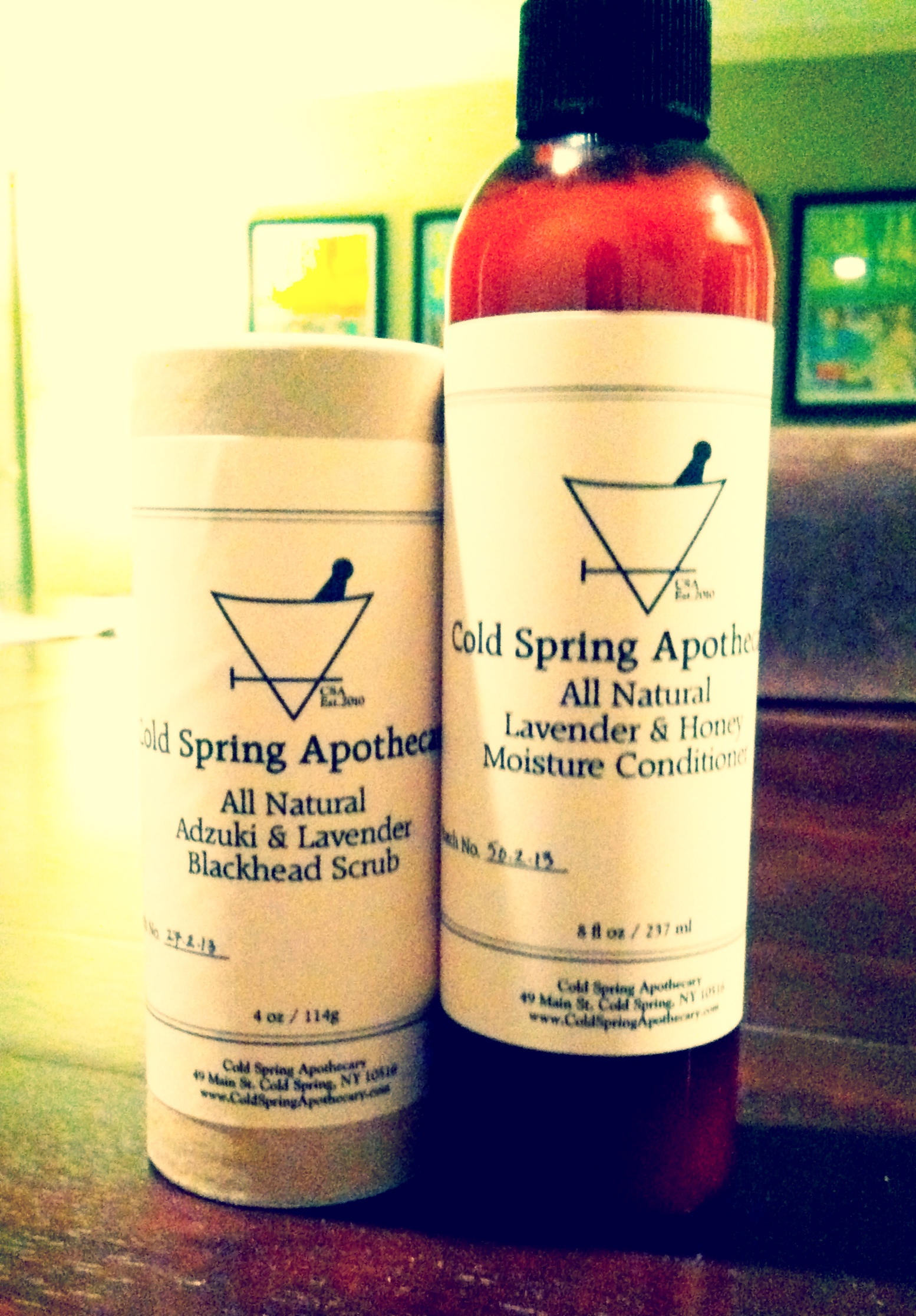
Face Scrub and Conditioner from Cold Spring Apothecary

Shop recommendation:

CSA – Cold Spring Apothecary
49 Main Street
Cold Spring, NY 10516

Website: http://www.coldspringapothecary.com/

I’m excited about these two new purchases!

The Cold Spring Apothecary on Main Street in Cold Spring, NY has a cute shop with lots of fantastic natural, small batch goodies. These two, face scrub made with only three ingredients (adzuki Beans, lavender essential oil, and baking soda) and Lavender Honey Conditioner, are both exciting finds for me.

I really want to find products that are made locally and are also natural and organic. Another thing that is important to me is that they be BPA (bisphenol-a) free as well. However, with the exception of places like LUSH (which not only is not local, it also can sometimes give me a headache just walking by due to the strong fragrance!) I haven’t found too many options that I like.  I have a few other local brands on the list that I’d like to try and will hopefully get to soon.

As for the CSA products, I’ve used them twice so far, and I like what I’ve found. Hope I like them as much by the end of the bottles!

IMG_3371

Store front sign of Cold Spring Apothecary